 Comparison
9 Signs It's Time for Home Care or a Facility
Last Updated: November 1, 2026
Quick Summary
Choose home care when a senior's needs are manageable and the home is safe, and consider a facility when supervision is needed around the clock. Frequent falls, nighttime confusion, missed medications or one family member providing constant hands-on care are signs home support alone may not be enough.
- Home care covers bathing, dressing, medication reminders, meals and companionship in the person's own house.
- Facilities provide staff on site at all hours, shared dining, activity programs and on-site nursing.
- Frequent falls, wandering or nighttime confusion with no one available to respond signal a need for more support.
- Ask each option for a written breakdown of fees and which services cost extra.
- A professional assessment can clarify which option matches the level of need.
Table of Contents
- Home Care vs Facilities: What Each Option Actually Provides
- Signs a Senior Needs Assisted Living Rather Than More Home Support
- Pros and Cons of Home Care
- Pros and Cons of Facility Care
- Cost of Home Care vs Nursing Home in Alberta
- Dementia Care at Home vs a Facility
- Questions to Ask Before Choosing Senior Care for Your Family
- Booking a Free Assessment to Map Out Your Next Step
- Frequently Asked Questions
When families in Airdrie start weighing choosing between home care and facilities, the decision usually comes down to one question: where will your loved one get the right level of help? The answer depends on daily needs, health conditions and what the older adult wants.
Home care brings support into the familiar setting of a person's own house. A facility providesround-the-clock staff and shared services under one roof. Neither is automatically better. The right fit depends on how much help is needed, how safe the home environment is, and what the family can sustain over time.
Home Care vs Facilities: What Each Option Actually Provides
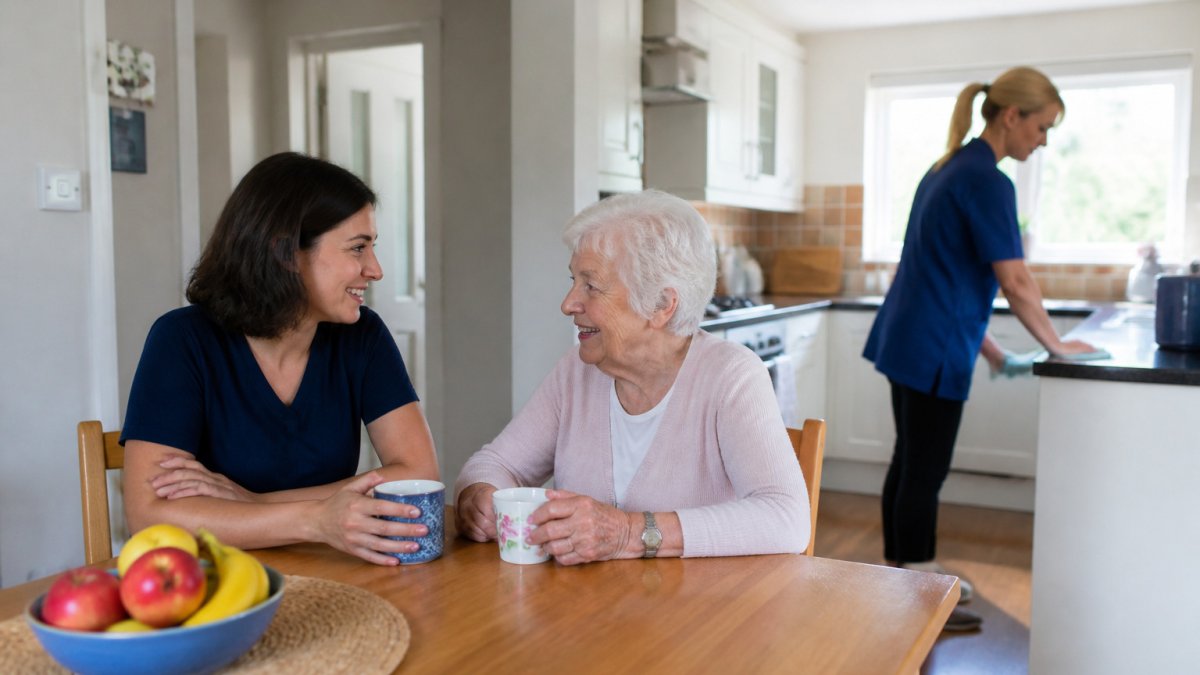
Home care usually covers personal care such as bathing and dressing, medication reminders, meal preparation, light housekeeping, errands and companionship.
Facilities offer a fixed environment with staff on site at all hours, shared dining, activity programs and on-site nursing. Care is delivered within the facility's routines and schedules. Families should ask each option exactly which services are included and which cost extra.
Signs a Senior Needs Assisted Living Rather Than More Home Support
Some situations signal that home support alone may not be enough. A common warning sign is frequent falls, wandering or nighttime confusion that leaves no one available to respond. When one family member is providing hands-on care around the clock, caregiver burnout often follows.
Other signs include missed medications, unsafe cooking, and declining hygiene that more visits cannot fix. Assisted living can be the better choice when these problems persist. A professional assessment can help clarify which option matches the level of need.
Pros and Cons of Home Care
Pros:
- Care happens in a familiar home, which supports comfort and routine
- Services can be scheduled around the person's preferences
- Family members stay closely involved in daily life
Cons:
- Coverage depends on the number of hours booked and may leave gaps overnight
- Families may need to coordinate schedules and manage home safety
- Costs can rise quickly if care is needed for many hours each day
The trade-offs of keeping care at home come down to a few clear points.
| Aspect | Home Care Pro | Home Care Con |
|---|---|---|
| Setting | Familiar home, supports comfort and routine | Coverage depends on hours booked |
| Scheduling | Services fit the person's preferences | Overnight gaps may remain |
| Family role | Family stays closely involved | Families must coordinate schedules and home safety |
| Cost | Not stated in this section | Costs rise with many daily hours |
Pros and Cons of Facility Care
Pros:
- Staff are on site at all hours for immediate response
- Social activities and shared meals reduce isolation
- Nursing and safety features are built into the environment
Cons:
- Moving away from a long-time home can cause stress and loss of routine
- Care follows facility schedules rather than personal preferences
- Monthly fees may be high and can include extra charges for added services
Cost of Home Care vs Nursing Home in Alberta
Costs vary based on the number of hours needed, the services included and the level of medical support required. See local in-home care pricing in Airdrie for concrete figures to compare. Learn about Client Directed Home Care Invoicing and how eligible clients in Airdrie and Calgary may be able to use government funding for home care. Pricing depends on the care plan. For current prices or a quote, contact Happy at Home Healthcare Services directly through our website.
Families should ask each option for a written breakdown of fees. Some government programs may help offset costs in Alberta, so check the official source for current eligibility rules before making a decision (Continuing care - Overview).
Dementia Care at Home vs a Facility
Dementia care at home allows a person to stay with familiar objects, routines and people, which many find calming. Caregivers trained in dementia care can offer attention and help adapt the environment to reduce confusion.
A facility offers secured units, structured activities and staff trained in dementia care around the clock. The right choice depends on how the condition is progressing, the safety of the home, and the family's capacity to provide supervision. Happy at Home Healthcare Services offers dementia and Alzheimer's care at home. Learn more about our dementia and Alzheimer's support options.
Questions to Ask Before Choosing Senior Care for Your Family
Before deciding, families should ask several practical questions:
- What level of supervision is needed day and night?
- Who will provide care, and what training do they have?
- What happens if the care plan needs to change?
- Are there clear written fees and contract terms?
- Can a different caregiver be requested if needed?
Clear answers to these questions make it easier to compare options fairly.
Booking a Free Assessment to Map Out Your Next Step
A structured assessment can help you compare home care and facility options for your family. Contact Us to arrange a conversation with the Happy at Home Healthcare Services team.
Frequently Asked Questions
How do I decide between home care and a care facility for a senior?
Start with the person's daily needs. If they can manage most daily living tasks with some help, home care often works well. If they need supervision around the clock, frequent nursing attention or a safe setting for complex behaviour, a facility may be the better fit. Look at how often help is needed, whether the home is safe, how the senior feels about each option, and what your family can realistically sustain. A consultation with a qualified care professional can help you weigh these factors for your situation.
Can seniors with dementia receive care at home?
Yes, many seniors with dementia remain at home with specialized support. Caregivers trained in dementia care can help with routines, safety, communication and reducing confusion or distress. Home care tends to suit people who are still comfortable in familiar surroundings and whose safety needs can be managed in the house. As dementia progresses, wandering, nighttime care needs or the caregiving load on family may change the picture, and it is worth reviewing the plan regularly with a professional.
What signs suggest a senior may need more support than home care can provide?
Common signs include frequent falls, missed medications, weight loss, poor hygiene, unsafe cooking, increasing confusion, wandering, or a caregiver who is exhausted or unable to keep up. When several of these appear together, or when needs change faster than the current care plan can adapt, it may be time to discuss assisted living or a facility. Noticing these signs early gives the family more choice in how the next step is made.
What questions should families ask when comparing home care providers and care facilities?
Ask how staff are trained, especially for dementia or medical needs, and whether caregivers are consistent or rotate often. Find out how care plans are created and updated, what happens after hours, how emergencies are handled, and what the total monthly cost includes. Ask how quickly services can start and what the process is if you are unhappy with a caregiver or need to change the plan. Written answers make comparisons far easier.